Showing posts with label BA4 Studio. Show all posts

Thursday, 22 November 2012

Project Evaluation

Initial Teamwork and Research

As mentioned int the teamwork document; I am very happy with how our team worked together as we all showed a readiness to work hard and a commitment to the project. The fact that we all agreed very quickly on Medal of Honor helped us approach the intimidatingly large task of creating a game of similar proportions - but of course better! My research first took me to look at all of the war as a whole and this lesson in military history was very eye-opening. So many elements of the war were down to complete chance, or due to a mess-up on one side or another. These fundamental moments of the War being so delicate and easy to have gone the other way made me consider more deeply how History itself unfolds and how chance and fate play a greater part in it all. I believe that the plot for our game is plausible, but only due to our dedicated and continued research into the subject in order to make sure that this invasion could have indeed happened. This kind of realism helps build the atmosphere of player responsibility and makes our game a more rounded experience for the player.


Team Roles and My Participation

Although I have thoroughly enjoyed working in this team, I have learned that I need to take on less of a 'literary role' shall we say. I found that by the end of the project a large portion of the written work was down to me along with the spell/grammar checking of all submissions from my team and this has worn me down. I have not had the time to draw or model in 3D and seeing as this course is a BA - I feel that other team members have not fully considered their actions on my project experience. Too much of my time has been spent re-sizing text, re-formatting text, changing layouts and I do not plan on letting that happen again.


Tutor Feedback and Design Document Revisions

The feedback from tutors on this project has been very helpful, and has often acted as the start of a new wave of inspiration for our game. However the final session with Matt was very helpful - it has since put a lot of work on my shoulders this week as he basically asked me to completely re-format the whole Design Document, and re-order it. I am very grateful for his feedback and I do believe we have a better document now, it is just that because the other members of my team were either ill, or unable to read the file on their Macs it made an extra large workload for me this week. That said, I did attempt to completely re-format the GDD into a 1940s newspaper style - but have decided that due to the complexity of the information we are trying to deliver, and the sheer scale of our document, that it did not serve the GDD best and I have since opted for a blend of both the previous layout and a more creative one. Below are the images of our failed attempts;


Wednesday, 21 November 2012

Newspaper Photographs

These photographs are taken of some newspaper re-prints I was given by my Grandmother. They are re-prints of the Daily Mail taken from such iconic evens as Goebbels dying, Hitler dying and the end of the war on V Day. From these I have taken inspiration for the layout and design of the Game Design Document, and have enhanced the adverts in Photoshop to use as a form of contextual decoration for our GDD.


Research Summary

After our initial choice of Medal of Honor, and a game set around the World War 2 era; I set about researching the war in particular potential areas of weakness which were overcome by chance rather than skill. It is precisely these types of moments which we were looking to manipulate into a plausible 'alternate history' for our game.

I began my research with a detailed look into the Battle of Britain; and found that the two most interesting points in my research were the use of radar signals in the battle (and their lack of detection by German aircraft reconnaissance) and the weather conditions which affected the morning attack by German forces on 'Eagle Day'. Had the weather not been severely overcast the Germans were likely to have one this battle and this would have in turn put them in a far more powerful position to invade on land.

At this point we each decided which characters we were going to work on and research; Shaun - William, Charlie - George, and Jess and I - Nancy. I then looked into how we could create a believable Open World to explore of 1940's Britain. Below are some photos I took in Norwich when I saw a building which just seemed perfect for Nancy's Newspaper building.


I spent a large amount of time researching 'ordinary' (if you can call it that) british civilian life whilst the war went on abroad. Whilst reading 'War and Peace - 1940s' I was constantly picking out elements which I thought would be interesting to include in a levels design; be it allotments in the Tower of London Moat, or 'alien-citizens' being pushed onward to London's own form of concentration camps. NPCs collecting tin, or digging in their allotments, children sorting out refuse for recycling.

Harwood, J, 2010. War and Peace - 1940s. 1st ed. London: Readers Digest Publishing.

The third section to my research is into the roles and occupations of women in war-time Britian and the part they played in manufacture, labour, artillery production whilst the men were away. The portrait I drew below is based on an image taken from the above book (page 64) of a group of Lumber workers having a tea-break;


The last 2 elements of my research was firstly into how the ATS and Women's Land Army operated, what the women were doing and how that would fit to Nancy's character-role in the game. Our team chose to use a lot of historical reference in our design and so this type of research was vitally important to make sure that our characters were believable and interesting to the player.

And secondly into propaganda artwork and illustration from the time of war. The website I took a lot of my reference artwork from was The National Archives Website;
The National Archives | Research and learning | Exhibitions | The Art of War. 2012. The National Archives | Research and learning | Exhibitions | The Art of War. [ONLINE] Available at: http://www.nationalarchives.gov.uk/theartofwar/. [Accessed 8 - 22 November 2012].

Aside from my Secondary Research, both Jess and myself spent time playing games and using our own feedback of play-experience to shape the design of our own game. I found in many ways this hands-on research to be the most eye-opening and it did help me to think about our game and the Medal of Honor franchise in a more analytical and removed way. All in all, I think I could have continued and delved into much more detail with my research as World War 2 is a widely covered subject, and in order to create a convincing and coherent game-world; the more research, the better the game!

Thursday, 15 November 2012

Analysis of W.A.R's Market Potential

Below is my personal analysis of our game with regards to how we would market it post-production. I find it is very useful to be able to remove yourself from your work and look at it from someone else's point of view. One of the most important views to understand is that of your target audience. Our target audience is comprised of FPS and Action gaming genre fans which already enjoy this type of game - however due to our historical nature to our game there is the potential of enticing non-gamers to give our game a try out of their interest in the history surrounding our plot, or the epic war-time romance featured in our narrative, or the ambitious split of gameplay between linear and open-world activities.


Strengths

British history and culture forms the basis of out game; this means that we will be likely to have a competitive edge over similar games by championing our ‘British Identity’ in UK markets.

W.A.R. has a simultaneous plot seen through 3 different characters eyes. Not only is a greater perspective of WW2 achieved through this gameplay style, a more poignant narrative can be displayed. Similarly set games are yet to achieve such a balance between the character’s real-lives and high-octane warfare.

Our game has a unique plot; a German land invasion. This has been written as realistically as possible to what could - and what was expected to – happen. The classic ‘fight-the-enemy’ game story is coloured with the confusion tactics employed by the Home Guard and other British forces, the camaraderie of the British public and the unusual realities of Britain at War in the 1940’s.

W.A.R features completely new IP (Intellectual Property) which is rare in current game markets and could be used to great advantage in the marketing for the game.


Weaknesses

The subject of World War 2 in games is a vast and unvaried sector of the FPS genre. It is very
easy to fall into clichés or generic FPS gameplay traps. Keeping your game original is key.

Our clearly British perspective of storytelling in the game may alienate consumers from other countries. Tackling the taboo subject of WW2 with for example a German market would present a lot of problems and could potentially estrange a large portion of Western Europe due to its storyline if not sensitively handled in the game’s design.

The FPS genre of gaming is home to the largest selling console games of all time and so a certain level of quality of experience and game-finish is expected and predicted by our target audience. You are likely to be compared to the existing IP’s such as the Call of Duty franchise which is a world-wide hit.


Opportunities

Working to our strengths as a game; New IP, British-based storyline etc. we should focus a lot of our marketing for the game to make it a hit on British soil. As I have mentioned above, other game markets will each have their own challenges – challenges which will be more easily overcome with a strong and positive reception from UK gamers. In other words, if we can win over British consumers, we can then move onto the USA and later European markets.

Our game aims to take away some of the false fantasising of warfare without removing any of the fun. As our plot should accurately propose what could have happened in WW2 had events played out slightly differently, our game could potentially be used as a supplementary tool for learning.

Much like the Assassin’s Creed series used the ‘database’ feature of their game to pack the title full of useful information on Renaissance Italy and it’s inhabitants – so too can we market our game as a instrument for historical inquiry.


Threats

If not marketed correctly, our game could easily become lost in the plethora of other WW2 games released every year. Therefore a detailed and focused marketing and promotional plan needs to be drafted in order to pique the interest of gamers already saturated with first-person shooters and historical strategic war-games.

As we are entering such a common genre of game, it is likely that the reviews will be highly critical and will probably compare us to the aforementioned franchises. The overall finish and quality of the game must aim to be impeccable in order to avoid typical reviews of ‘lag’ or ‘repetitive gameplay’.

Another marketing ‘faux-pas’ we could easily fall in to is that our choice to have the main protagonist of the game to be a woman as an attempt to create a ‘girl-friendly’ or even worse; a ‘girls-only’ war game. If too much emphasis is placed on this feature, consumers are likely to assume at least the former if not the latter before even buying the game.

Tuesday, 13 November 2012

Evaluation of Teamwork

Below is my evaluation of how my team has worked together on our 'Studio Project' this term. My team comprises of; Charlie Sykes, Shaun Slade, Jessica Magnus and myself.


How we've worked as a team;

I think that Charlie, Shaun, Jess and I have worked extremely well as a team on this project. We have met as a team almost every day we have been timetabled into uni for lectures by meeting up early in the morning if theres an afternoon lecture on a Monday, similarly with Tuesdays and often staying on after CS sessions to continue work and discussions.

One of the reasons I feel we have been so successful in co-operation is that we are all seriously committed to giving the project our all. Even though only one of us is based in Norwich, and 3 of us balance uni work with part-time jobs, we have kept up-to-date and worked hard when we can.

A key element to our teamwork has been the excellent level of contact between team members - primarily through our Facebook Group. This group has allowed us to essentially create a dev-diary which is private and purely for group use. As work is produced, ideas thought of, written work added to - it is all uploaded to our FB group instantly allowing all members of the group to access it, comment on it and in some cases edit and re-submit it. This organic process of creation and evaluation which has gone on through out the project has allowed us to collaboratively work as a team even over the weekends when we are apart.

When in university together, we often use the time to debate our latest ideas, re-assess group-members roles and tasks ahead. Often Shaun will be the member of the group questioning why we have made these decisions - challenging our thinking and forcing Jess and I to justify our decisions. Charlie is usually the member who quietly listens to both sides and is dragged in to mediate! This might sound like these discussions are confrontational, but now that Shaun, Charlie and I have worked on projects before together in the First Year, we are easily able to understand each other's reasoning behind comments. This level of personal and professional familiarity allows us to push each other, to openly question and critique each-other without fear of real offence. This is at its clearest when I am critiquing an image Shaun has posted on the group - his work is great, but I know it can be better - and I will make a comment about his anatomy or posing of a character. Shaun will complain that I am never happy with his work, but usually up on reflection he realises that I was indeed correct in my comments, and a better outcome is achieved overall.

Jess is new to the course, and to the group - but not new to me. We have been friends since freshers week last year and so I thought for her daunting first project on Games it would suit her best to be working with someone she knew well and who I know she has no worries asking for help from. A key element of good work is when people feel free to ask for help, question decisions and have fun and I honestly feel that we have achieved this without deliberation.

Wednesday, 7 November 2012

Final Crit - Marie-Claire Tuesday 6th Nov

Here are some bullet pointed resolutions from our latest group crit;

  • Ensure that the Game Design Document accurately and effectively conveys the Core Essence of the Game - Show people the flavour of the game!
  • Start to put together your 10 minute group presentation.
  • In your pitch, bring your story to life - make people experience the feel of the game with you. Think about how you can make it an experience for the audience.
  • There will be a timetabled drop-in session for groups to bring their presentations to try a 'dry run'.
  • Your group research needs to be in a separate document with a written explanation of the reasoning and method behind your decision making backed up with the evidence of the research carried out by the group.
  • Make your research explicitly clear and show your thinking.
  • Pull the research off your blogs and present as a document.
  • Also put all of your artwork into a separate document. Both documents are to be submitted as PDFs.
  • Make sure that there is an extensive Bibliography for all submission
  • Be sure to make it crystal clear how you have worked as a team, your techniques, contact, methods. Compose this in a form of project evaluation.


Tuesday, 6 November 2012

Life Drawing

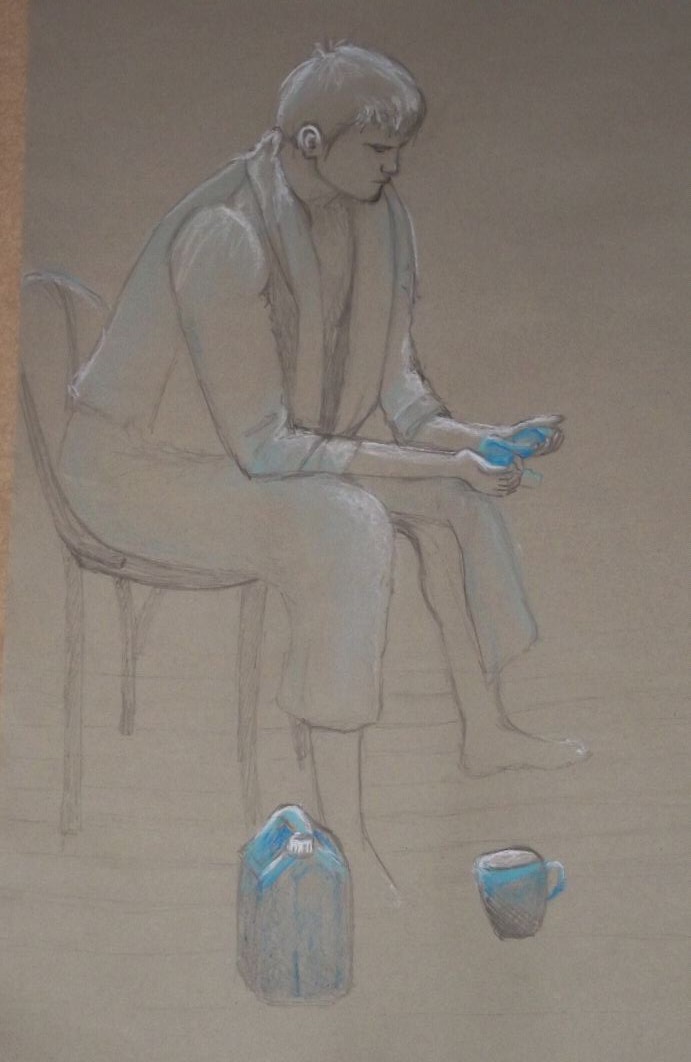
Here are the images I produced when in Life Drawing Classes this term.
These look into how we can create an implied narrative through a series of images and we spent a fair amount of time in the class discussing the connotations of certain props and their placement for best effect. In these images I have adopted a little artistic licence in order to make them more dramatic.


Monday, 5 November 2012

General Research Notes

When researching our game design document for art styling and the influences we had taken from existing games we looked at the following websites.

Below are the websites we looked at to understand better the purpose of our design document and the type of information expected to be included.
http://en.wikipedia.org/wiki/Game_design_document
http://www.gamepitches.com/

http://irrationalgames.com/files/2010/05/BS_0011.jpg

The look and feel of the Bioshock pitch document is the style we will be going for when we design our Games Document, it uses artwork and background images to give a sense and feel of the game's art design. We wanted our document to look and feel like a document which could have been produced during the war as a source of information. The texture we have created for the background of the document will be adapted to fit in with the sell sheet, the pitch and the promotional material and shall tie-in all our media.
http://www.scribd.com/doc/32211144/Bioshock-Pitch-Document


http://media.giantbomb.com/uploads/0/3318/317474-gf_art_014.jpg

This document was breif in its writing, but included effective yet simple artwork and concept work which I thought was a great example of how an idea can be put across without a lot of detail involved.
http://www.scribd.com/doc/32182400/Grim-Puzzle-Doc-Small


When looking at the art style of our concept artwork, we looked at the in-game styling of characters in Borderlands 2 vs their concept art counter-parts. The styling change between game and artwork enforced the validity of our own concept ideas for our game. We didn't want to stray into the generic style of 'realism' for war-games.
http://gamentrain.com/blog/wp-content/uploads/2012/03/borderlands_2_characters.jpg
http://en.wikipedia.org/wiki/Borderlands_2


http://images.wikia.com/gtawiki/images/3/3a/GiovanniCasa-Artwork.jpg

Another art style we looked at for concept ideas was that of the GTA series. Their illustrative design style of characters really sets the tone of the game - we hope that ours too will set the tone for our game.
http://en.wikipedia.org/wiki/Grand_Theft_Auto_%28series%29


http://gcalers.files.wordpress.com/2011/01/nazi-propaganda-poster-during-war.jpg

Below are the websites used to research important figures of the second world war - more specifically those in control of the media and news at the time. I was interested to look at German propaganda in contrast to the propaganda evident in Britain at wartime.
http://www.historylearningsite.co.uk/fuehrer_principle.htm
http://www.historylearningsite.co.uk/rudolf_hess.htm
http://www.historylearningsite.co.uk/propaganda_in_nazi_germany.htm


http://farm5.static.flickr.com/4129/4945155051_a5e7a646be.jpg

These are the websites we looked at when trying to decide interesting areas to base open-world and story-line gameplay. They have excellent zoom-able maps which show London at wartime in the 1940s. This allowed us to plan locations and be sure of their historical accuracy.
http://www.maps-of-london.com/city-london-west.jpg
http://www.maps-of-london.com/city-of-London.htm
http://www.maps-of-london.com/
http://1940.iwm.org.uk/?page_id=18


http://www.womenaustralia.info/exhib/war/gifs/ARTV00332.jpg

Below are some more websites I looked at when researching women's roles in wartime Britain, and how they were portrayed in media at the time. In my previous blog post on the ATS, a lot of debate surrounded the representation of women at work in wartime. They were supposed to be alluring sophisticated women doing their part for the war, whilst at the same time looking respectable well-worked women. This balance was often hard to find and several drafts of posters such as the one above were made before one was approved for printing.

http://www.iwm.org.uk/collections/item/object/205193229
http://www.iwm.org.uk/history/womens-auxiliary-services-during-the-second-world-war#
http://www.nationalarchives.gov.uk/theartofwar/prop/home_front/INF3_0117.htm
http://en.wikipedia.org/wiki/Auxiliary_Territorial_Service
http://www.atsremembered.org.uk/


This is a link which I used to research Wartime Surnames which allowed me to choose suitable surnames for our main characters, and similarly for William's comrades in the game; 'Jones' and 'Fletcher'
http://www.portsmouth.gov.uk/yourcouncil/1561.html


When trying to decide on a name for our game, we looked to Winston Churchill for inspiration, and his famous rousing speeches at wartime.
http://www.rai.it/dl/images/1280399796230winston.jpg
http://www.ripresume.com/wp-content/uploads/2012/06/Winston_Churchill_Quote_Success-2.gif


Below is a list of links to websites briefly looked at for reference purposes when writing the plot and back story for our game. These were for quick reference only as the main bulk of the research on this topic was from books (see Shaun's work).

http://en.wikipedia.org/wiki/Special_Operations_Executive
http://en.wikipedia.org/wiki/Auxiliary_Units
http://en.wikipedia.org/wiki/Operation_Sea_Lion
http://en.wikipedia.org/wiki/Fall_of_France
http://www.bbc.co.uk/archive/battleofbritain/11411.shtml

Sunday, 4 November 2012

War and Peace Research

I am taking these excerpts from my book War and Peace; 1940s by Jeremy Harwood, Reader's Digest.

The National Savings campaign spent more money on posters than the Ministry of Food as the posters were an important part of educating the masses on what will help with the war effort each in their own little way. Famous slogans such as 'Careless Talk Costs Lives', 'Dig For Victory', 'They Can't Get On Without Us' and 'Keep Mum - She's Not So Dumb' have become timeless and iconic phrases of the country at war. A quote from the book from a compiler at the time reads; "Take a short walk from the office where this report is being written and you will see 48 official posters as you go on hoardings, shelters, buildings, including ones telling you to eat National Wholemeal Bread and not to waste food.... to ones exhorting the need to save for victory."
Saving for victory was all about citizens scrimping by whilst the war was on in order for them to aid the recovery of the economy by spending their money after victory!

http://www.nationalarchives.gov.uk/theartofwar/img/pics/works/INF3_0229.jpg

Information on Dunkirk
The Blitzkrieg put the Nazi forces in a very strong position to take France after their successful plunder of Western Europe and so when the front broke down at Sedan Paul Reynaud (The French PM at the time) commented "The road to Paris is open". It was after this that the German forces began to advance on the Channel coast and the British decided that a swift removal of troops was the wisest choice. A rescue then ensued and this is where the first scene of our game is set.

The Home Guard 
The Home Guard were the 'army at home' and by 1943 their average age of their men was 30. Their force was improvised - "pickaxes, crowbars and golf clubs were all pressed into service...In the absence of anti-tank weapons, volunteers were taught to make Molotov cocktails - bottles filled with resin, petrol and tar - and how to fuse and hurl them at an invading enemy." (page 30)  They served as an important feature of the home defense in the War - in the event of Britain being invaded they were the ones expected to fight the insurgents. We would like to feature the role of the Home Guard in our game as they were an integral part of British Life during the War and their 'soldiers on a shoestring' stories develop our colourful game world no end.


Women at War
"In December 1941 Britain became the first nation in history to conscript women when it was decreed that unmarried women aged between 20 and 30 were to be called up." (p 62)

http://www.nationalarchives.gov.uk/theartofwar/img/pics/works/INF3_1235.jpg

Many women who joined the forces found themselves dispatched to work in the war industries such as aircraft production or ammunition factories. After the compulsory conscription of women to work in the war industries and to join the 'national service' in July 1941 "the battle for production" (p 65) was being fought valiantly. This successful call to arms brought about a mobilisation on a scale Hitler would have never anticipated. 

The ATS (Auxiliary Territorial Service)

The following quotes and images are taken from the above website; 

"Princess Elizabeth joined the Auxiliary Territorial Service (ATS) in February 1945 at the age of 19. She trained as a driver and mechanic, although she slept at home rather than in barracks with her fellow recruits. The princess reached the rank of Junior Commander. Mary Churchill, Winston Churchill's youngest daughter, was also a member of the ATS."


"Join the ATS, 1941
Art.IWM PST 2832
In 1941 Abram Games was commissioned to design recruiting posters for the Auxiliary Territorial Service (ATS) to help shed its dowdy image. This first poster was withdrawn from circulation as it was thought that the 'blonde bombshell' image might make the ATS seem immoral. The second poster was also withdrawn as it was considered too 'Soviet' in style. The final poster, issued in 1944, featured a middle-class, respectable-looking woman."


Below are some details of the book I looked at

Description
Wartime Britain saw heroism and hardship, as the country pulled together towards a common goal. It was an era of growing equality that carried over into peacetime. In 1945, the people threw out their war-winning Prime Minister and chose instead a Labour government who delivered the welfare state and the NHS.
Key Features
PublisherReader's Digest
Date of Publication29/01/2010
Language(s)English
FormatHardback
ISBN-100276442504
ISBN-139780276442506
GenreRegional History
Series TitleLooking Back at Britain

Publication Data
Place of PublicationLondon
Country of PublicationUnited Kingdom
ImprintReader's Digest

Friday, 2 November 2012

Different Maps

Below is a link to Jess Magnus' blog which shows some great research on maps - this is actually what I read to understand more of Lothar's drop-in session! I thought I had better include it!

http://jessmagnusgad.blogspot.co.uk/2012/10/maya-maps-research.html

Here is the excellent post;


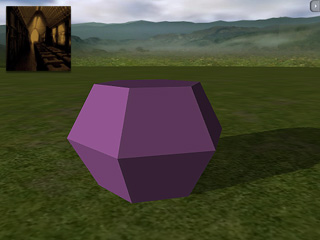
Diffuse Map:
Now I after my Research this is just your colour map - but when Lothar said your Colour map I thought it was something entirely different:

" A diffuse map is a texture you use to define a surface's main colour.
In order to work well with a normal map and a specular map, a good diffuse texture should not have any directional lighting included, it should only have generic "ambient occlusion" - ie. the surface gets darker in deep cracks and around embossed details. If you are generating your normal maps from high-poly geometry, you should bake a matching ambient occlusion pass from the geometry and multiply this on top of your diffuse texture to make sure that the lighting matches the normal map. "
http://wiki.splashdamage.com/index.php/Diffuse_Maps

Diffuse map

  • The most frequently used texture mapping method. It wraps the bitmap image onto the 3D geometry surface while displaying its original pixel color.
  • Any bitmap image, such as scanned images or images captured by digital camera, can be used as diffuse map to represent photo realistic quality.
  • Users can also use image software to make pre-rendered texture effects such as shadow, bevel, bump, lighting or weathering effects.  This approach can effectively simulate real-world 3D effects while greatly saving system resources and rendering time.
http://www.reallusion.com/iclone/Help/iClone3/15_Multiple_Channel_Texture_Mapping/Types_of_maps.htm
http://www.boogotti.com/root/face/face.html
THIS!

The above link(http://www.reallusion.com/iclone/Help/iClone3/15_Multiple_Channel_Texture_Mapping/Types_of_maps.htm) was really useful as it gives a whole list of the different types of maps you can use.

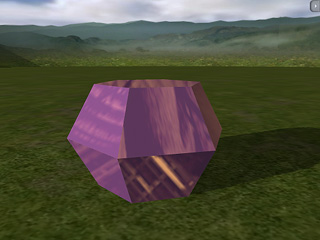
Specular Map:
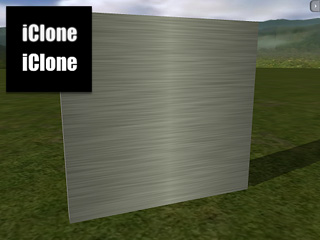
Specular maps are the maps you use to define a surface's shininess and highlight colour.
The higher the value of a pixel (from black to white), the shinier the surface will appear in-game. Therefore, surfaces such as dry stone or cotton fabric would tend to have a very dark specular map, while surfaces like polished chrome or plastic would tend to have lighter specular maps.
The colour of a pixel is also used, to calculate the resulting colour of the surface. A very saturated specular map will have a very different visual effect than a grey specular map. If you need a more "neutral" highlight on a surface, your specular map should use the inverse of the diffuse map's colour. Using the same colour on the specular as on the diffuse will result in a more saturated highlight when viewed in the game.
You can use contrasts in specular to make a surface appear more visually interesting in the game - for example, this door has a very dark specular for the wood while the metal parts are much lighter, which will make the metal stand out more as a shinier surface when light hits it. This sort of contrast can help make surfaces in the game appear more realistic too.

http://wiki.splashdamage.com/index.php/Specular_Maps


http://www.reallusion.com/iclone/Help/iClone3/15_Multiple_Channel_Texture_Mapping/Types_of_maps.htm

Normal Mapping:

Normal map

(Pixel Shader only)
  • When you click the Import Bump button you will find import as normal map. Check this box if the map you are loading is a normal map.
  • A Normal map (Pixel shader only) is made from a high polygon model. Its color representation will affect surfaces like a regular bump map while providing higher degrees of detail.
  • iClone can import normal maps created in ZBrush or 3D Studio Max. By using Normal Maps you can make simple low-poly models appear as highly detailed 3D objects
  • If the image you are loading is not a specially designed normal map the result will not be as good.
http://www.reallusion.com/iclone/Help/iClone3/15_Multiple_Channel_Texture_Mapping/Types_of_maps.htm

http://www.neuroproductions.be/experiments/3d-normal-mapping-pixelbender/

http://blenderartists.org/forum/showthread.php?129726-(realtime)-Boom-BlenderDoom-)/page2

Other Maps that the website 
http://www.reallusion.com/iclone/Help/iClone3/15_Multiple_Channel_Texture_Mapping/Types_of_maps.htm showed:

Bump map:
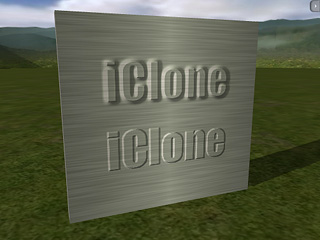
Bump mapping uses the grayscale values of an image map to create variations in the shading of the surface to which the map is applied. It adds details to 3D models without increasing the number of polygons. In iClone, white areas of a bump map are shown as high and black areas are shown as low.
By moving around the light source we can see how the angular light projection changes the bump look. If the light is facing the surface from a straight 90 degrees angle it the bump effects are the least noticeable.

Opacity Map:
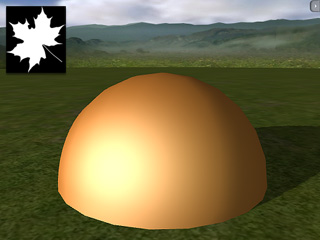
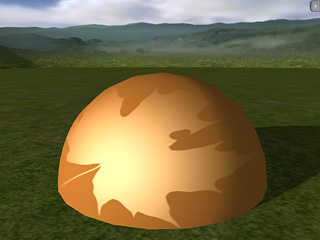
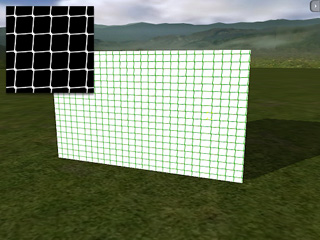
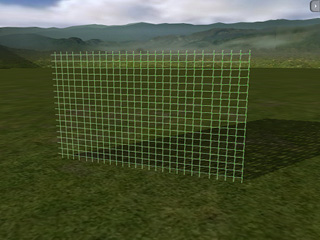
  • Make transparency and cut-out effects from grayscale images. The black part will get cut out; the white part will be fully displayed; the gray values determine the transparency (alpha) level of the object.
  • Use bright gray RGB(253,253,253) on the Opacity map to make 2-sided 3D Surface from Plane mesh.


Glow Map:
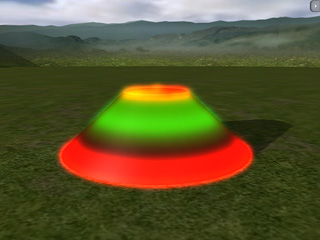
This texture mapping technique allows users to control the glow shape, color and strength.
  • Glow maps will blend with your original diffuse maps, so the lighter the diffuse color (or glow color), the stronger the glow effect.
  • A bright diffuse map in combination with a bright glow map might cause overexposure.


Reflection Map:
Reflection map is also referred to as environment map. The image map is projected onto a 3D surface to represent a reflection of the environment.


Robin Silcock

I am a Second Year Games Art and Design student at Norwich University of the Arts. After exploration of a number of roles in my first year, I am now looking to graduate as a 3D Artist with applicable skills in Maya, Mudbox, ZBrush and Photoshop. I understand that my skills in this field are not there yet - but I aim to achieve this goal through consistently working through the programs in my University and Personal Projects. I love to be busy - I have always had a lot of things on my plate since the age of 7 where I successfully balanced school with Ballet, Tap, Horse-Riding, French, Piano and Singing Lessons! In the same fashion, my university schedule is just as hectic and varied; I am a Peer Mentor to first year students, Student Rep for Second Year, and President of the Enterprise Society. Like I said, I love to be busy! I am a Games Hippie - so to speak - I believe that Games if designed and harnessed in the right way, will be able to help solve many of the global issues we have today - even if it starts off in a small way. Just look at the positive effects that Facebook and Twitter have already had... When navigating my blog;
  • Works in Progress - This section is a constantly running account of all my current projects - personal and for university. It will contain reference images and website links and sometimes less than coherent posts, so be prepared!
  • Finished Pieces - This is where you will find my more polished artwork. Looking for help with Maya? Check out the posts tagged "Maya How-To's"